Sunday, 28 September 2014

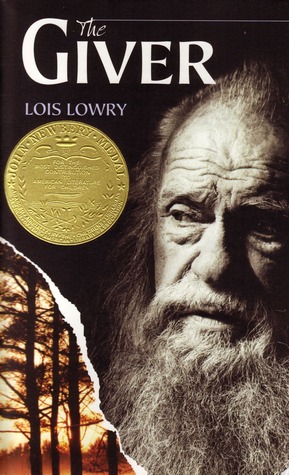
The Giver - Lois Lowry Review

3636

Publisher: Ember
Published: 1993
Pages: 179
Genre: Children's/YA Dystopia
Rating: 3.5 Stars

I remember being on the phone to someone last week, talking about reading The Giver. I said something like “Yeah, this is one of the original dystopians, I think” and he corrected me. It’s apparently the original young adult dystopian. Bit pedantic, but there you go.

That’s the kind of correction Jonas faces a lot, in a community that’s very very strict on Precision of Language.

The Giver is a sci-fi dystopian about a twelve-year-old boy (Jonas) living in a community with no fear/war/hunger. Everyone goes around on their quaint bicycles, people are unfailingly polite and often clinical in their speech, and it seems like every second word is capitalised. People are assigned to roles/careers on their twelfth birthday and nothing is contested (or if it is, it doesn’t matter: any appeals go to a Committee that doesn’t do anything).

Also, the world has no colour or music, because they would disrupt the Sameness. 

Announcements come over an intercom that’s never turned off, enforcing a litany of rules: no lying, girls under seven must wear their hair up, no nosiness. Everyone has the same birthday. And love doesn’t exist. Neither do any other feelings.

On the day of Jonas’ Ceremony of Twelves, he is shocked to see that he hasn’t been designated a job. Instead, he has been selected as the new Receiver of Memories. His predecessor and trainer, the Giver, needs to pass it on. The Receiver of Memories holds the memories of Outside for the whole community, so that they don’t have them – again, to preserve Sameness. So the Receiver knows sunshine, and music, and colour, but also warfare and fear and starvation.

Jonas goes to begin his training and slowly unravels the truth about his world.

The Giver is a very fast read, with few pages and simple, direct prose. So I picked it up one day after school and read half of it in probably less than two hours. It’s quite powerful, though – and I’m finding it hard to pinpoint why, because I can spot plenty of faults.

For one, the surprises weren’t that surprising. I knew what Release was immediately from the context (and from having read Matched, I guess), and besides that there weren’t really any massive twists. I think the better part of that was how it affected Jonas and the others, the smaller details and ripple effects.

I like the characterization (though your mileage may vary – some find it quite bland), particularly of Asher and Lily, Jonas’ younger sister. The world-building details were very interesting and fresh, and I actually enjoyed all the capitalisation – at least it told me what to pay attention to!

What I loved most about it was the creepiness. Even from the first few pages, there was a sense of menace in the innocence of things. It's told from Jonas' perspective and, him being eleven at the start, he takes things in his society for granted that we get majorly weirded out by.

The ending, though: that annoyed the hell out of me. I hate it, honestly. It’s completely open-ended and probably allegorical (which is always annoying, and makes it seem very childrens-book-ish when until then it had straddled borders). The events leading up to it felt rushed too: the stuff before that had been nicely paced and then this wasn’t. Which was disappointing.


But I suppose I can’t complain, because The Giver did get me in trouble twice in Chemistry for reading it under the table. Let me just say though – just before the teacher gave out the second time, I finished the last page. Victory. 

Wednesday, 24 September 2014

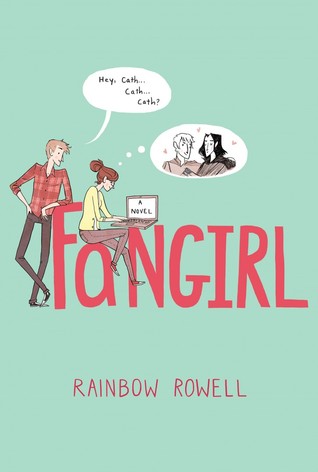
Fangirl - Rainbow Rowell Review

16068905

Publisher: St. Martin's Press
Pages: 459
Rating: 5 stars (+)
Blurb: Cath is a Simon Snow fan.

Okay, the whole world is a Simon Snow fan...

But for Cath, being a fan is her life—and she’s really good at it. She and her twin sister, Wren, ensconced themselves in the Simon Snow series when they were just kids; it’s what got them through their mother leaving.

Reading. Rereading. Hanging out in Simon Snow forums, writing Simon Snow fan fiction, dressing up like the characters for every movie premiere.

Cath’s sister has mostly grown away from fandom, but Cath can’t let go. She doesn’t want to.

Now that they’re going to college, Wren has told Cath she doesn’t want to be roommates. Cath is on her own, completely outside of her comfort zone. She’s got a surly roommate with a charming, always-around boyfriend, a fiction-writing professor who thinks fan fiction is the end of the civilized world, a handsome classmate who only wants to talk about words... And she can’t stop worrying about her dad, who’s loving and fragile and has never really been alone.

For Cath, the question is: Can she do this?

Can she make it without Wren holding her hand? Is she ready to start living her own life? Writing her own stories?

And does she even want to move on if it means leaving Simon Snow behind?


*****

I'm just going to lead with a quote from the New York Times Journal of Books review, because it so perfectly encapsulates my feelings about it:

“Fangirl is a deliciously warm-hearted nerd power ballad destined for greatness”

Can I just say I love the term “nerd power ballad”? Anyway. Fangirl is the second book I bought with the Eason book voucher I got for my birthday (thanks, Cian). I wasn't sure about it at first because I don't think I've ever read a book about someone's first year in college before, especially since it's contemporary. I wouldn't even have considered that YA before now. I'm glad to say Fangirl changed my opinion on that.

Whew. How do I start to describe Fangirl? I guess I'll start by praising the title: YA books with a catchy one-word title are all over the place, but too many of them don't have anything to do with the content. This one is great: one simply colloquial word in the teenage vernacular that runs on the story's hook.

I can express its popularity this way: people in school have read it. Tons of people in my school. I mention the title and they say, “Oh, I know that one. It's really good.” This is often coming from people who generally don't read. I guess I'm mostly surprised by that because Fangirl hasn't (yet) become a phenomenon like Harry Potter or The Hunger Games – it's a quieter book, like everyone's secret.

The characterization was fabulous. I don't think I can adequately express just how brilliant Levi – my favourite – was, but I'll try. Levi isn't someone I immediately took a liking to. He spends a lot of the first part of the book sitting on the landing waiting for Reagan, Cath's roommate, to let him in, and Cath sees him as almost belonging to Reagan. Then he steals her protein bars (more on that later) and she starts talking to him.

Levi is ... unlike anyone I've ever read about. He's so genuine, so kind and caring, but not in a pushover Peeta-type way. He's funny and normal, studying Agriculture. And he has vulnerabilities – like the fact that he's unable to learn by reading (in direct contrast to Cath's love for reading and writing), and that Reagan cheated on him. Have some quotes:

““It's okay if you're crazy," he said softly.
"You don't even know-"
"I don't have to know," he said. "I'm rooting for you.”

“What's the plan?" she asked.
He grinned. "My plan is to do things that make you want to hang out with me again tomorrow. What's your plan?"
"I'm going to try not to make an ass of myself."
He grinned. "So we're all set.”

“You give away nice like it doesn't cost you anything.” (Cath to Levi – he's certainly not the moody type. Honestly, Levi is just the most comforting person character ever. I want him in my life.)


I loved her Dad as well, who's portrayed as a brilliant creative (who's not a writer or artist, surprisingly, but rather an advertising person of some sort – words fail me), but so very absentminded. It's a wonder he's managed to mind the twins on his own all these years, and he and Cath have a very close relationship. He's a very endearing character, and I admire Rowell for making the father involved in a YA story.


Cath's chosen fandom is Simon Snow, the wildly popular series about a boy who goes to wizarding school. It's an obvious rip-off of Harry Potter, and I think that's an interesting effect – Rowell is using the exact hype and Pottermania (oh god, did I just say that?) there was all over the world. It settles Cath into the real world and lets us identify with her a bit.

Not a whole lot, though, which is where I have to talk about something that disconcerted me. Cath seems entirely unhealthy. We already know she's painfully shy, but when she goes to college she stays in her room all the time on the internet, terrified of her roommate. She hides boxes upon boxes of protein bars under her bed so that she doesn't have to eat in front of people in the food hall. She turns down invitations to every social event. And unless I missed something, it's doesn't say that she suffers from something like anxiety, and the only mention of attending a therapist is from ten years before, after her mom left. So that was worrying. You couldn't chalk her obsession down to fangirling alone. I'm a fangirl (look at this blog), and while I'm not a particularly intense one, I don't think anyone is as extreme as she is without underlying issues. She contemplates dropping out of college and failing a big assignment just so she can finish her fanfiction. (Finishing her fanfiction is framed as a big coming-of-age moment).


One of the parts that got me really emotional about Fangirl is the description of what it feels like to have a parent leave. Obviously it's different for everyone, and there are varying degrees of, well, badness – but as the story arc tilts towards Cath's mother who left when she was in third grade, on the day of 9/11, we feel her pain and her resentment incredibly strongly. Rainbow Rowell has an amazing ability for tugging on readers' heartstrings without ever descending into melodrama.
This part is about Cath and her twin sister Wren:

“They were a package deal, period. Since always.

They'd even gone to therapy together after their mom left. Which seemed weird, now that Cath thought about it. Especially considering how differently they'd reacted – Wren acting out, Cath acting in. (Violently, desperately in. Journey to the Centre of the Earth in.)

Their third-grade teacher - they were always in the same class, all through elementary school – thought they must be upset about the terrorists . . . .

[...]

Her mom left for good a week later, hugging both of the girls on the front porch, kissing their cheeks again and again, and promising that she'd see them both soon, that she just needed some time to feel better, to remember who she really was. Which didn't make any sense to Cath and Wren. You're our mom.

Cath couldn't remember everything that happened next.

She remembered crying a lot at school. Hiding with Wren in the bathroom during recess. Holding hands on the bus. Wren scratching a boy who said they were gay in the eye.

Wren didn't cry. She stole things and hid them under her pillow. When their dad changed their sheets for the first time – not until after Valentine's Day – he found Simon Snow pencils and Lip Smackers and a Britney Spears CD.”

Terribly long quote, I know, but it was so hard to choose. The writing here is just so emotive. And the matter-of-fact tone makes it worse.


Once I got into Fangirl I read it everywhere, even under the desk in school. It was so engrossing, and I felt so emotionally attached to – well, not specifically the characters, more the relationships between them – that I couldn't let it go. I sat in bed one night reading the last two hundred or so pages while listening to music, and for some reason I kept laughing and crying out loud. It could have been just me, but that book – to use fan language (fanguage? And come on, don't I use it already?) really really really gave me feels.  

And now I'm dying to read Eleanor & Park. 
Saturday, 20 September 2014

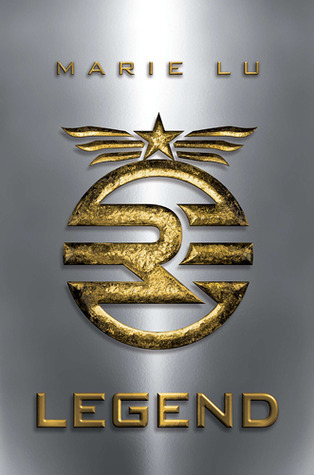
Legend - Marie Lu Review


9275658


Publisher: Putnam Juvenile
Pages: 305
Source: Bought
Rating: 4 Stars


Last YA dystopian for a while, I swear. I have an incredible contemporary up next (Fangirl by Rainbow Rowell - perf).

Legend is a Young Adult dystopian novel published in 2011, at the height of the dystopian frenzy. This, I think, is why it’s so original and freshly-spun – because otherwise, it never would have survived.

The dual narrative follows June, the city’s prodigy, their rising star, the only known person to have achieved a perfect 1500 in the Trials (exams taken at the age of ten that determine your future), and soldier-in-training, and Day, a fifteen-year-old criminal on the fringes of society. When June’s brother and caretaker, Metias, is killed in action, June learns that Day is the culprit. She’s accelerated to take Metias’ place in the patrol – first mission, track down Day.

I wouldn't have bought this book based on the back cover (it just didnt grab me) but the first page drew me in. Boiled down to its most basic (“Someone kills family member, character departs to avenge their death”), the plot is nothing new, but I think it’s interesting that it was put in a Young Adult (and dystopian) setting, because I haven’t seen many of those around, and the feelings and actions involved are different when the protagonists are only fifteen. For example, in an adult novel a cop might seek to avenge his wife, but here Metias acted as June’s parents (yes, it’s one of those Young Adult novels where the parents are dead).


I was surprised at first to see that the book is so short, clocking in at only 305 pages, which very nearly dissuaded me from buying it. But it's extraordinarily fast-paced, speeding up as the book goes along. It's so tight that I could forgive how short it is. 

(Ouch, practically this whole review has just been backhanded compliments). 

Lu made it easy to visualise the world, which is good because I'm normally terrible at visualisation. Gritty details are left in there, and it's a very visceral read (as it has to be, because honestly the world-building might not hold up if I examined it too quickly). 

The protagonists' ages are so unrealistic. Day's age was mentioned early on in the book but I missed it and was blindsided by it later on. Sure, they're both smart as hell, but the things they endure are just too much for fifteen-year-olds - or are we just used to 16 being the age when teens are out having dystopian adventures? 

I don't want to analyse this too much, because I'm afraid I'll spoil my enjoyment of it. Let's just say that it was exhilarating and exciting, and I'm glad I bought it.

Grrr, why couldn't it just be a standalone?

Tuesday, 9 September 2014

Breathe - Sarah Crossan Review

Publisher: Greenwillow (2012)
Genre: YA Dystopian
Pages: 373
Rating: 3.5 Stars

Anyone so thoroughly sick of YA Dystopian they can't stand the sight of them is going to want to look away now. For those not irredeemably jaded ...

11544466Breathe by Sarah Crossan has three protagonists, each with point-of-view chapters; Alina, Bea and Quinn. The premise is that all trees are dead and Earth has run out of oxygen.

Everyone lives inside a Dome (sound familiar?), where they have to pay for artificial air if they want to, y'know, breathe. Quinn is a Premium, a rich boy whose family can afford all the air they want. Bea is an Auxiliary who struggles to pay for breathing: she can't dance, sing or exercise enough for fear of using up too much air. Quinn and Bea are best friends. On top of that, Bea is in unrequited love with Quinn.

Alina is different, due to the not-so-inconsequential fact that she's a rebel (although what passes for rebellion here is growing illegal plants. Growing plants, full stop). One day, Quinn spots Alina in the cafeteria and fancies her. Quinn and Bea leave the Dome for a weekend holiday with air tanks, but Alina's leaving at the same time. Of course, where Alina's going is trouble. Quinn and Bea get caught up in it and bam, drama and danger and adventure.*

I gave this 3.5 stars because it's a good solid read and a pleasant surprise The three points-of-view was quite hefty to pick up at the outset and I didn't enjoy having to get used to three narrators. Their voices are reasonably distinctive, thankfully, and well-characterised, in my opinion.

Not that I know what goes on in boys' heads, but Quinn seems like the most realistic one I've ever read. He's not exactly shy in his internal monologue, I have to say. You can almost feel the hormones. Bea is sensitive, studious and compassionate. She was easy enough to sympathise with, I suppose, but you certainly wouldn't be in awe of her strength. Also, at the start of the book she spends half her time being a teatowel and wishing Quinn would notice her. Alina is your typical strong rebel girl, though even more aloof and hostile than usual. She's not just snarky; at first she seems genuinely uninterested in talking to or mixing with the other main characters (non-rebels, but in the same school).

I quite like the premise, and there's a decent amount of attention paid to the scientific-authenticity side of things. The plotline twists and turns skilfully and there's a real sense of danger, though not as much suspense as there could've been. The setting was really well-described, particularly a certain place outside the Dome that I can't talk about because of spoilers.

Twists! Fabulous twists, both in the main story and in the relationships between characters.

Didn't completely wow me compared to some books I've read recently, but worth a look. It's the first in a trilogy, which I miiiight continue. Depends.


*too snarky?

Sunday, 17 August 2014

Fractured - Teri Terry Review

Hi, guys. Je suis retournée. I feel like the most frustrating part of reviewing a book is that I can't spoil things, so I'm left saying 'it was shocking when a certain thing happened halfway through, and --' - which makes no sense. There will be general spoilers for Slated (#1), though nothing you couldn't guess.


Publisher: Orchard Books
Publication Date: April 4th 2013
Rating: 3*
Pages: 432
Genre: Dystopian


I really really loved Slated (my review here) but I just couldn't get into the first half of this book. Could not. It was all dream sequences and flashbacks, weird disconnected memories and events that seemed to have no bearing on how I remembered the plot of the first book. And so it took me weeks to read that part (this is becoming a worrying trend - I think I need my reading mojo back) but I bought it so I was sure as hell going to finish it.*

So what made the first half so hard to get through? I've already briefly mentioned most of it, but here's some more detail.

Dream sequences are expected in this series - the prologue, the very start, of the first book, is one. But I feel they got out of hand in Fractured and devolved into filler, especially since most of them are very similar. I understand that Kyla is trying to remember something so her mind keeps flashing back to it and uncovering more details, but it got samey and there was probably a better way to present it for the sake of the readers.

Following from that, Fractured lacked the narrative drive I loved Slated for (in the first half). It seemed like a lot of plot strings were being assembled frustratingly slowly, and while they do lead up to a great finish, it's very frustrating for impatient readers (like me, in this instance).

This gripe applies to the whole book, but - the writing style seemed very unusual, so much so that it distracted me from the story. There was nothing strictly wrong with it, but the way the words were strung together was strange. This is probably down to personal taste, so take it with a pinch of salt.

So what did I like? I think the ending was a resounding success. The plot threads that had so gradually been built up pulled together seamlessly (well, almost). One character whom I hadn't been particularly fond of throughout the book redeemed himself near the end, and then tragedy struck. So I wanted more time with them and didn't get it. Also, there is a shocking betrayal at one point, leaving me feeling like Kyla never gets a break. Basically, there was some absolutely brilliant stuff in Fractured, but it didn't start early enough or last long enough for my tastes. Quite possibly a case of second-book-in-a-trilogy syndrome.

I can't say much here without fear of spoilers, but it's really well researched. Fractured in particular requires quite a lot of specialist knowledge (or a remarkable dexterity with creating believable fictions). I appreciated that.

So: the whole book is a massive entanglement of secrets, lies, and Kyla trying to understand it all even though she barely understands herself. The world order (as it's a dystopian) is still completely askew, leaving lots of material for the third book. It also avoids the trap of making one side completely bad and the other perfectly good.  And yes - I am definitely going to read Shattered (out now).

I almost feel like I should rate the two halves completely differently, but overall it's three out of five stars.

Tuesday, 1 July 2014

Some Fine Day - Kat Ross Review

*Published: 1st July 2014
Publisher: Angry Robot/Strange Chemistry
Pages: 384
Thanks to Angry Robot/Strange Chemistry via Netgalley for this ARC.
Blurb: Sixteen-year-old Jansin Nordqvist is on the verge of graduating from the black ops factory known as the Academy. She's smart and deadly, and knows three things with absolute certainty:
1. When the world flooded and civilization retreated deep underground, there was no one left on the surface.
2. The only species to thrive there are the toads, a primate/amphibian hybrid with a serious mean streak.
3. There's no place on Earth where you can hide from the hypercanes, continent-sized storms that have raged for decades.
Jansin has been lied to. On all counts. 


NOTE: I've just heard that Strange Chemistry is shutting down, so the publication date listed above could be dodgy. My sympathy to all the authors left out in the cold and, oh man that is sad. I'm mourning an imprint now.

In short: Mixed feelings about some parts, but an enjoyable and mostly fast-paced read.


In not-so-short: Alright, so it took me way too long to read this book. I had a hard time getting into the first 20 (or so) pages. I just couldn't bring myself to care about the characters or events (oh wow, they're going on a holiday. Whoop-dee-doo) so I kept procrastinating. The day before yesterday I sat down and read it properly and - fortunately - enjoyed it a lot more. So stick with it, it's worth it. My Kindle app tells me I wrote 'It's growing on me' 15% through.

I get that the blurb is supposed to intrigue you, but I do feel it's a bit lacking in actually explaining what the book's about, so here's my run down. 

At the start of the book, Jansin Nordqvist's on the fast track to success in her home underground (where humanity was driven after a ton of global warming and the arrival of hypercanes rendering the planet's surface uninhabitable) as a military cadet. I'm not totally sure why, but job options are apparently limited to military, the sciences, mining and ... hard labour, or something. 

Her parents - a high-ranking army official and an important scientist - book a short trip to the surface as a special vacation. Unfortunately, Jansin is then kidnapped by - shocker - humans on the surface. Savages, or so we think. She's taken away with them, held captive etc etc ... and when she finally settles in and starts to like them (and finds lurve) her people track her down and rescue her, by storming the island with all her new-found friends and ... yeah. She's pretty pissed about this, so she starts digging around in the military's secrets and bam bam bam tada dystopian plot. 

So that's my plot summary. Here are my thoughts. 

I found the pacing/timeline majorly weird. I'm not sure if this is a good or bad thing, but it felt like the book started in the middle of a book and finished at the end of a sequel, if that makes any sense. You know the feeling you get for where a book's going to go, and when? You expect the moment of doom *here*, a big reveal *here*. It defied all that. Made me fairly uneasy, at times, and made the book seem a lot longer since the storyline was put together in a way that seemed like several 'plots'. That said, it was interesting: once it gets going, the book is a pretty stereotypical dystopian - but the timeline is certainly original, though again, it might rub some up the wrong way. 

Also, the book was slow in some places and then the ending was WHAT THE HELL FAST I CAN'T CATCH UP. So yeah.

Infodumping was pretty weird, too. I'm overusing that word, I know, but it was. The start of each chapter has a little paragraph that's just straight-up infodumping, doesn't even make any pretenses about it, and that was fairly annoying - at first. I mean, it would say things like: 


The spirit of cooperation that permitted the Consortium to complete its work amid global chaos soon disintegrated under the weight of political pressures and looming famine. Communication between the far-flung colonies was severed.

But towards the end I did grow to appreciate those, as the whole story came together. My Kindle App is full of notes like 'Trust your readers!' because narrator Jansin overexplained things quite a lot - and then other times she didn't explain them enough. For example, there's an important plot point (a chemical used in biowarfare) where she explains the symptoms, and then shows someone who's been injected with it with a completely different set of symptoms? I might just be reading it wrong, but it was confusing. Like the timeline, it felt unbalanced. Then again, I do like world-building, so I could look past that. Which leads me onto...

The research was great. Alright, I am not nor ever have been a military cadet, to my knowledge, nor have I used hydroponics or any of the other topics in the book.So I wasn't exactly scrutinizing the novel for 100% correct facts. But it is a novel, and the point of that is to make your words seem realistic to the general public reading. With Some Fine Day, this was definitely a success. I don't even know where to start, but I felt like I was in capable hands with the research. It seems like some spec-fic YA novels lately were written like 'Oh, it's fiction anyway, no need to research.' This wasn't. Alright, there were some mistakes (such as when someone uses a GPS and I mentally scream 'YOU'RE UNDERGROUND AND YOU JUST SAID THE SATELLITES WERE KNOCKED OUT'.) Pro tip: Satellites are needed for GPS. Mad, right? But overall, fab research. Related to that...

I'm a big fan of the science here. Okay, I love science, and I love science fiction. It saddens me that much of the YA science fiction I read doesn't really have the 'science' bit down. This one did (to my limited layperson knowledge. Don't shoot me with your plasma beams, real scientists). There was the explanation as to how the apocalypse-of-sorts happened, etc etc, but there were also some original features. For example, Jansin's mother is a scientist (an agronomist, if I'm not mistaken). We actually see a little of her work, and later in the book we see a lot of the scientific research facilities. As I'm personally working in a research lab this summer, that was interesting! So yeah, that's a highlight.

I noticed a lot of diversity here. I don't know if this was accidental or if it was an intentional effort to diversify the book, but this is a lot less white-teenage-straight-girl-centric than some other books. Which should be commended, I guess. I like how the author doesn't make a huge deal out of it, just throws the details in there. Like, instead of just leaving the details out so everyone can whitewash them, she has pretty clear-cut descriptors like 'ebony skin and cornrows', plus two happily married gay men and Jansin's mother's name (Tamiko)

I have mixed feelings about the writing. Again, this was unbalanced. Some of the lines, especially towards the start, are pretty clunky - that's partly why I had a hard time getting into it. But almost all the chapter endings are fantastic and keep you turning pages, and there are some fabulous turns of phrase.So, basically - hated chapter beginnings (see above), loved chapter endings. So it just depends on your tastes, really. I'm not supposed to quote an ARC (already have, whoops), but here are some examples:

'[...] she neatly sidesteps the hook punch and punches him in the side. No, stabs him in the side.'
'[he - I'm no spoiler] turns to me, his eyes full of love and pity. And then he shoots me in the face.' 
 By the way, nobody dies in those two examples. That would be spoiling.

Suspense
SOME FINE DAY is very good at building up suspense. This could be to do with the stellar chapter endings, but whatever it is, it works. I was afraid to look at the page sometimes! (You know like when you're watching a scary movie and you cover your eyes? Yeah, that. With a book).

The effectiveness of the POV varied, and sometimes left me wondering if this was actually YA. Jansin's a teenage girl, but (especially at the start of the book) she says a lot of things that a teenager just wouldn't say, and she looks at them with a kind of hindsight. It's not just that she's a *smart teenager*, and thus thinks differently. Like I said, it's  like she's reflecting on it from an adult perspective. Then again, as the book progresses it gets a lot more YA and that's good.

There were some very intriguing hints dropped and then never followed up on. The ending obviously leaves room for a sequel, so they might be covered there. Bit annoying, but it does leave me eager to read on.

The cover's a bit unoriginal. Here's my petty side coming out. The cover's grand, it's not horrible, but eyes are just so so so overdone. A picture of a hypercane could've made a really nice picture. I mean, eyes suit Stephenie Meyer's The Host, because they're quite important in the book. But Jansin's eyes really don't matter here.

All that said, I still enjoyed it. It just left me with a lot to say. So ... good concept, some very cool elements, with somewhat dodgy execution in places.

Friday, 23 May 2014

Geek Girl - Holly Smale Review

Hey guys! Like I said, I bought Geek Girl by Holly Smale over the weekend (along with Breathe by Sarah Crossan and Fractured by Teri Terry), so here's my review, as promised.

Geek Girl features Harriet Manners, a self-diagnosed geek (who happens to be named Manners. Manners.) She makes no secret of this fact, by the way - the book literally starts with something like. 'My name is Harriet Manners, and I am a geek.' Subtle. She then goes on to use the dictionary definition of the word geek, and into a scene where she's essentially being the biggest drama queen of all time.

And man, it was so much fun.

I've probably said this so many times on the blog by now that it's meaningless, but I consider my normal genres YA science fiction, dystopian, post-apocalyptic, fantasy - things like that. This is a YA contemporary, plain and simple, but I saw it on display in my local Waterstones and just had to pick it up because of three things.

(1) Derek Landy had mentioned Holly before on Twitter (and as you all know, I am in love with his Skulduggery books - take my reviews of some of them here and here  for example). So that was a pretty great recommendation.

(2) The cover. What a gorgeous cover.

(3) The first page. Starts straight in with Harriet's distinctive voice and keeps you turning pages.

Look, I just made a list! I'm a lot like Harriet in some ways. Some. Not all. I don't have a habit of hiding under tables when the going gets tough, although I have been known to lie on the floor ... or sit on the table ... or plonk myself down on a desk whenever the fancy strikes me. I'm not sure whether Harriet cares if people like her or not. She's very self-deprecating (to a fairly irritating fault) but then again she does geek out all the time. Can she just not help it?

Anyway, this is less of a review and more of a ramble at the moment, so I think some kind of plot summary is in order.

It's really very simple. Compared to a lot of dystopians, SF, fantasy, etc., there's actually very little plot. But it's okay.

Beginning: Harriet is going along as normal with her dad and stepmother Annabel, best friend Nat, stalker Toby (more on that in a minute) and bully Alexa. She's a total geek, and she seems happy enough like that - or at least, she doesn't know any other way.

Inciting Incident: Nat cajoles Harriet into coming to The Clothes Show, a fashion show a few hours away. There, she manages to knock down several racks of goods (amassing damages of £3,000) - oh, and she also gets scouted by a model agent for a famous agency.

Middle: Harriet accepts the invitation and goes off  to modelling land to do photoshoots and catwalk s for famous designers (approximately a day after she's scouted. Approximately.) She also lies to pretty much everyone (silly Harriet). By the way, none of this is really spoilers because, as I said, this book is most definitely not plot-based.

Ending: ... Okay, I won't tell you that. I do have limits.

The reason the lack of plot didn't matter to me was that the writing is bloody gorgeous. Seriously. Okay, maybe gorgeous isn't the right word - it's not fancy-pants literary fiction or anything. But it's exceedingly witty and observant and fun. 

You know what? I'm in a listy mood tonight.

What I liked: 
(1) The writing - see above.
(2) Annabel, Harriet's stepmother's characterisation. At first she comes across as standard evil stepmother, but as it turns out she's just human (and sharper than they took her for). Also, my favourite, very heartwarming scene is between her and Harriet.
(3) It doesn't take itself too seriously. Some reviewers have complained about Wilbur's abundance of names for Harriet (Petal, Sponge-finger, Chocolate-drops, Baby-baby Unicorn... but I thought they were impressively inventive, and must have been fun to write.
(4). Nick. Just Nick, in general.
(5) Nat's sassiness. For example:
Nat rolls her eyes, "I was never going to hate you FOREVER, Harriet. Just a couple of days.""But you said...""We were FIGHTING. What did you want me to say? I'll hate you for about thirty six hours until I've calmed down a bit?" 
(6) The author herself. Damn, she's hella cool and nice.
(7) The fact that Harriet doesn't consider herself conventionally pretty, but was chosen for her quirkiness. Also, Wilbur's endearing idea that everything she does is intentional.

What I didn't like:
(1) It requires that you suspend disbelief to an absurd degree. In the space of about three days Harriet goes from reluctantly attending a clothes show to headlining a major fashion show. Huh. It's alright though, because the story is so fluffy and enjoyable you can just let it pass as long as you don't think about it too hard.
(2) Toby, the stalker. Don't get me wrong - Toby's scenes were pretty funny. But there was something niggling at the back of my mind: stalking is Not Okay, and it was being used as comic relief. Seriously, Toby literally followed her everywhere and memorized her schedule. He's also an uber-nerd - supposed to reflect her, I guess? Which means one of two things:
(a) Harriet is about to start stalking someone.
(b) Toby is going to become a supermodel.

Also, Holly Smale and I had a lovely conversation on Twitter (AKA she replied to my tweets. Several times. Hell to the yeah!). She's awesome. (She's @HolSmale, if you want to follow her).

Currently reading Fractured, sequel to Slated by Teri Terry (my review here).